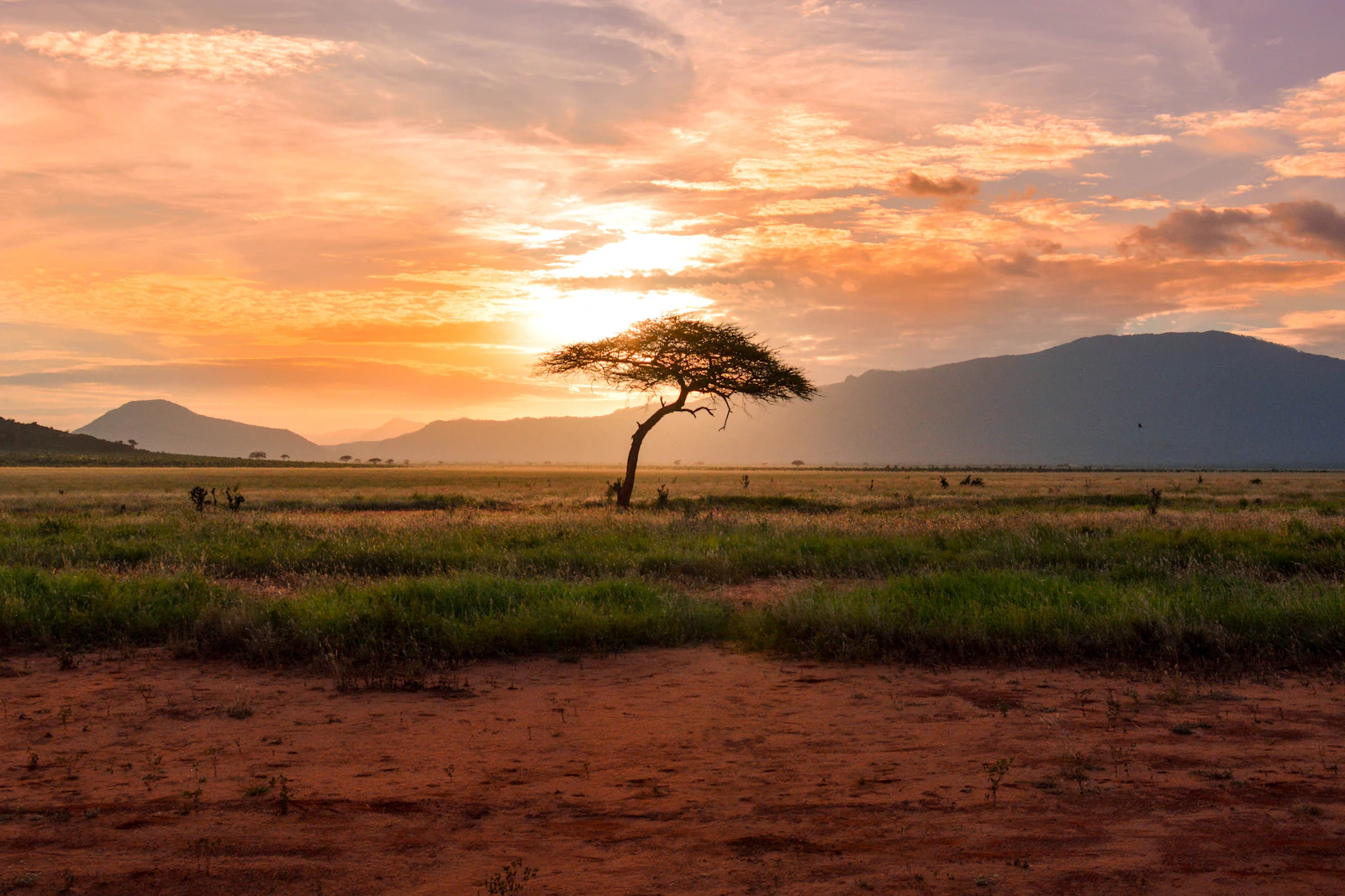
Uluru in the minutes after dawn is a reason to plan a journey. The monolith — 348 metres tall, 9.4 kilometres in circumference, arkose sandstone deposited 500 million years ago — absorbs and redirects the early sun in a colour sequence that moves from deep violet through burnt orange to coral pink over roughly twenty minutes. Painters have attempted it. Photographers have built careers around it. At Longitude 131°, guests watch it from bed.
That is the defining feature of the camp: not proximity to Uluru alone, but a direct unobstructed line of sight to it from a horizontal position. The sixteen tented pavilions sit on a private red-sand dune elevated just enough to clear the surrounding desert scrub. Each pavilion is oriented so the floor-to-ceiling glass frames the rock directly. Wake at five, make coffee on the verandah, watch the formation do what it does every morning with complete indifference to its audience.
The all-inclusive format removes the usual decision-making. Meals are served at Dune Top, the outdoor dining platform on the dune’s crest, where the kitchen builds menus around Outback-sourced ingredients — native quandong, wattleseed, desert limes, kangaroo — with a precision that the setting earns rather than merely claims. Selected wines and beverages are included throughout the stay. Eating in the open desert air as the last light leaves the horizon and the Southern Hemisphere stars take over requires no embellishment from anyone.
The cultural access here has more depth than most Outback properties. Longitude 131° works directly with Anangu traditional owners, and the guided experiences at the base of Uluru — led by Anangu guides interpreting the Tjukurpa, the law and narrative system that gives the rock its meaning — provide a framework for understanding that most of Uluru’s 250,000 annual visitors never access. The rock is the point here, not the backdrop. The guiding team understands the difference.