The Treehotel in Harads, Sweden, has a mirrored cube that reflects the surrounding boreal forest so completely it disappears from the ground. That’s the benchmark — not just for treehouse hotels, but for what niche accommodation can achieve when architects take the brief seriously.
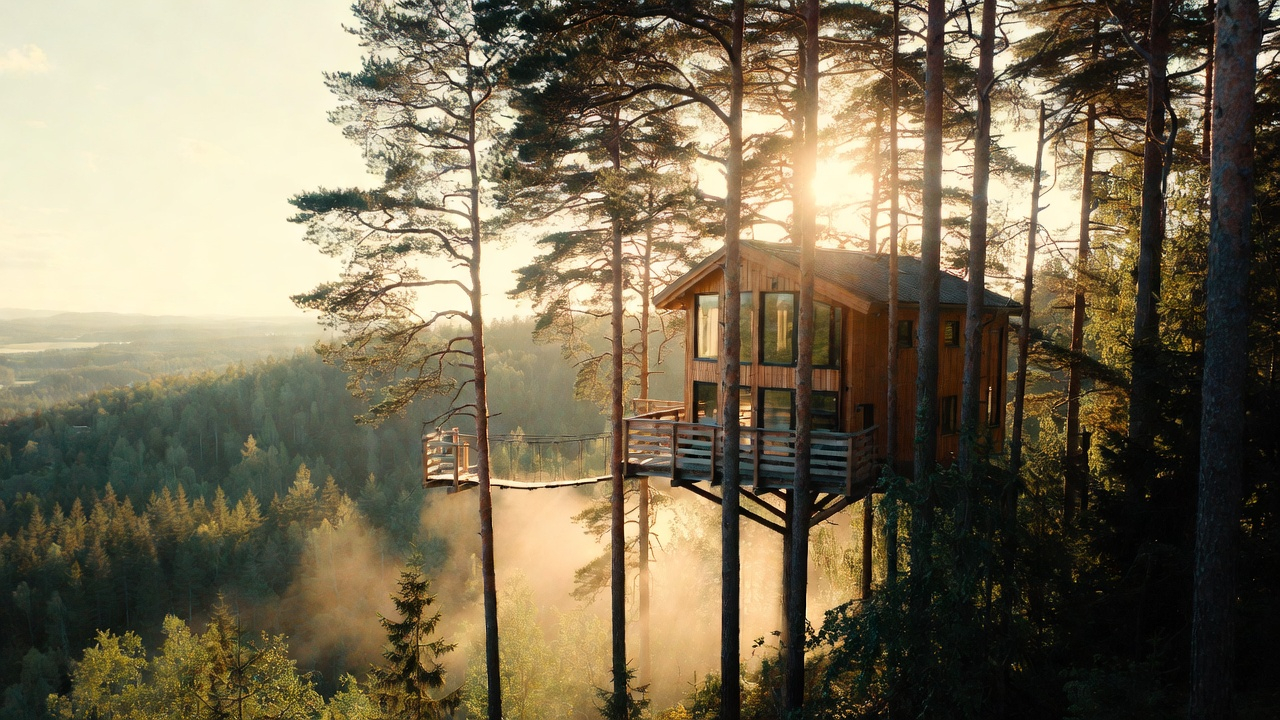
The best treehouse hotels are not platforms bolted to trunks. They are engineered structures that attach to host trees using non-invasive systems, allowing the tree to keep growing for decades. Inside, expect floor-to-ceiling glazing that frames forest views, private decks cantilevered over the canopy, and interiors that layer reclaimed timber, stone, and hand-woven textiles without tipping into rusticity. The point is to feel the forest, not to rough it.
What a conventional hotel room cannot give you: waking to birdsong at close range, watching mist move across the forest floor fifteen metres below, feeling the room sway slightly in a breeze. It sounds poetic. It actually happens.
Couples book them for the isolation and the drama — there’s no better natural backdrop for a special occasion. Families with children get something that outranks any theme park for sheer novelty. Solo travellers find that being surrounded by forest, with no lobby bar to drift to, is genuinely restorative. These properties tend to have fewer than ten units, which means no crowds and staff who actually know your name.
Sweden remains the reference point. The Treehotel in Harads offers multiple distinct structures — including the mirrored cube, a UFO-shaped cabin, and a giant bird’s nest — each designed by a different architect. The dark skies of northern Sweden make winter visits worthwhile for northern lights viewing.
Costa Rica is the tropical counterpart. Treehouse lodges positioned at the edge of cloud forests and national parks deliver wildlife-watching from the deck that rivals a dedicated safari. Sloths, toucans, and howler monkeys show up without any effort on your part.
Bali and Indonesia combine the treehouse format with the island’s spa culture. Properties in the Swiss Alps and New Zealand’s South Island push the concept into mountain terrain with completely different results — equally good, but different in character entirely.
Book three to six months ahead for the best properties, especially in peak season. Two-night minimums are standard. The best approach once you’re there is to stay on the deck with coffee and let the forest come to you. Filling every hour kills the experience.
For related stays that share the same approach to nature immersion, a jungle lodge goes deeper into the canopy ecosystem, while a bubble hotel trades the tree cover for unobstructed night skies.