A hotel on a hill has elevation. A hotel on a cliff has something else entirely — vertiginous exposure, a sheer vertical drop that makes the air feel different, the horizon feel closer, and the view feel earned. True cliffside hotels are defined by geological fact: the cliff shapes the architecture required to build there, the engineering required to keep it standing, and the specific sensation of existing at the boundary between solid earth and open air.
Not every “clifftop” property qualifies. A hotel on a gentle coastal slope with sea views is a sea view hotel. A true cliffside hotel requires dramatic vertical drop, a sheer or near-sheer face that produces the characteristic sensation of suspended exposure. The Santorini caldera rim drops several hundred metres to the water below. That qualifies unequivocally. A terraced Amalfi property on a steep but navigable slope is closer to the border.
The architectural implications are significant. Building on a genuine cliff face requires cantilever systems that extend rooms beyond the rock, foundations anchored into living stone rather than prepared ground, and terraced descending layouts where each level commands a different view angle. These constraints become the design. The most compelling cliffside hotels exist in their particular form only because the site demanded specific architectural responses that no other approach would have generated.
Skylodge Adventure Suites in Peru’s Sacred Valley is the most extreme interpretation in the category. Three transparent pods are bolted to a sheer granite face in the Andes, accessible only by climbing a via ferrata — a fixed-rope assisted climbing route — or by zip line descent from above. Guests sleep at altitude, suspended above the valley floor, with 300-degree panoramic views through transparent acrylic walls. It is not for the faint-hearted, but it is genuinely unlike any other hotel experience on earth.
Alila Jabal Akhdar in Oman occupies a plateau at 2,000 metres above the Al Hajar gorge, one of the most dramatic mountain landscapes in the Arabian Peninsula. The hotel’s infinity pool appears to float directly above the gorge, which drops away below the pool’s edge. Views extend across 1,500-metre walls of pink and grey limestone to the valley far below. Wind, altitude, and geological scale combine to create a sense of grandeur that few properties anywhere match.
Santorini, Greece defines the global image of cliffside luxury. The island’s caldera was formed by one of the largest volcanic eruptions in recorded history. The resulting cliff — a sheer drop from whitewashed Cycladic villages to the Aegean below — hosts some of the world’s most heavily booked hotels. Properties in Oia and Imerovigli sit directly above the caldera rim. The Santorini sunset watched from a cliff edge terrace is legitimately one of the world’s great travel experiences, and you will find no argument from anyone who has done it.
Amalfi Coast, Italy offers a more verdant and varied character. Villages cling to limestone promontories above terraced gardens draped with lemon groves. Hotels here tend to be smaller and more individual — converted fishing cottages and historic villas rather than resort-scale properties.
Cliffside hotels attract guests who actively enjoy the sensation of exposure. They can also produce unexpected discomfort for travellers who discover a previously unidentified sensitivity to heights upon arrival. If you have any uncertainty, request a room set further from the edge — paradoxically, these often feel less exposed than those cantilevered directly over the drop. Study the property’s images carefully before booking.
Access deserves serious thought at many cliffside properties. Spiral staircases rather than lifts, steep and sometimes uneven pathways, and the general verticality of sites not designed with universal access in mind means mobility considerations should be discussed with the property before you book.
Cliff orientation determines which light you experience most dramatically. Santorini’s west-facing caldera rim hotels are optimised for sunset, the sun descending behind the volcanic islands in conditions of genuine beauty. East-facing cliffside properties capture sunrise most dramatically.
The Oman and Jordanian cliffside properties offer different light entirely: morning sun on desert gorge walls, when low-angle light catches pink and ochre rock at an angle that turns stone to fire, is among the most spectacular natural light effects available to anyone who simply sits still.
Altitude and exposure typically mean cleaner air and significantly reduced ambient noise — even busy tourist destinations appear quiet from a cliff face several hundred metres above the activity. Privacy is an inherent benefit too: sheer cliffs are not easily accessed from below, making genuinely private terraces far more achievable than at sea level properties.
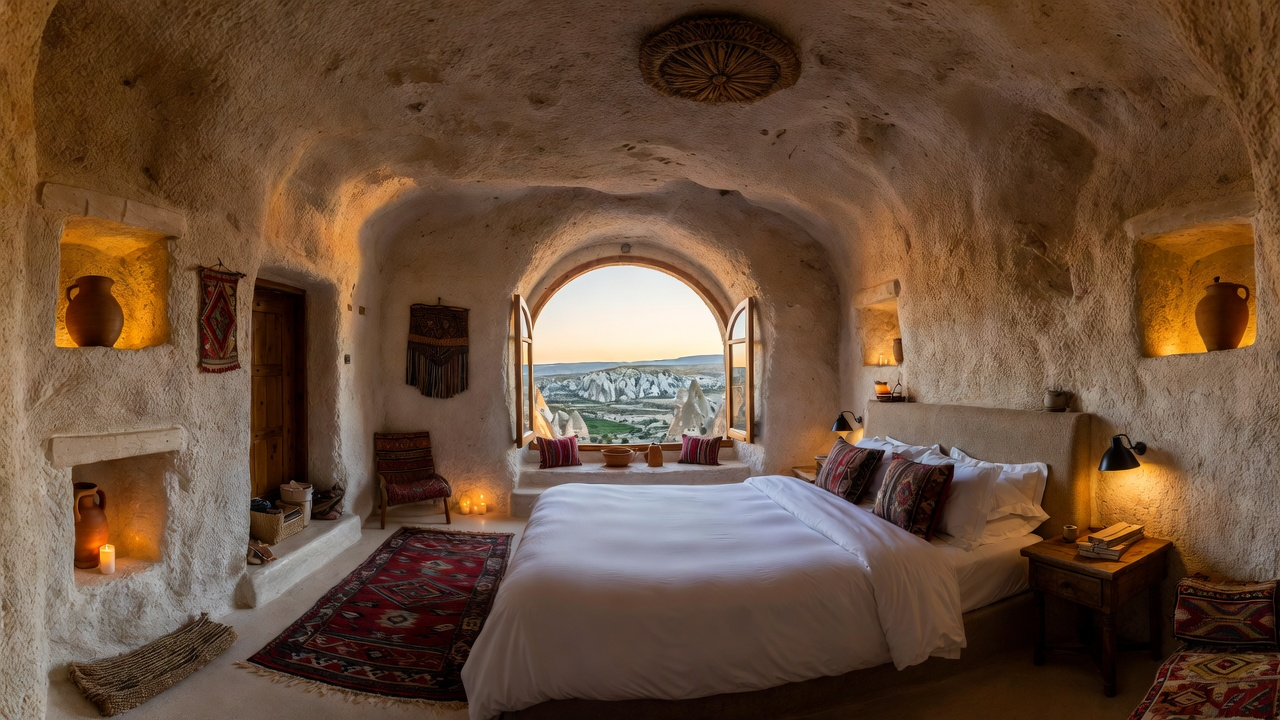
For a complementary geological experience from the opposite perspective, cave hotels place you inside the rock that cliffside hotels view from the outside. Desert camps offer a different extreme landscape experience with its own particular quality of exposure and scale.