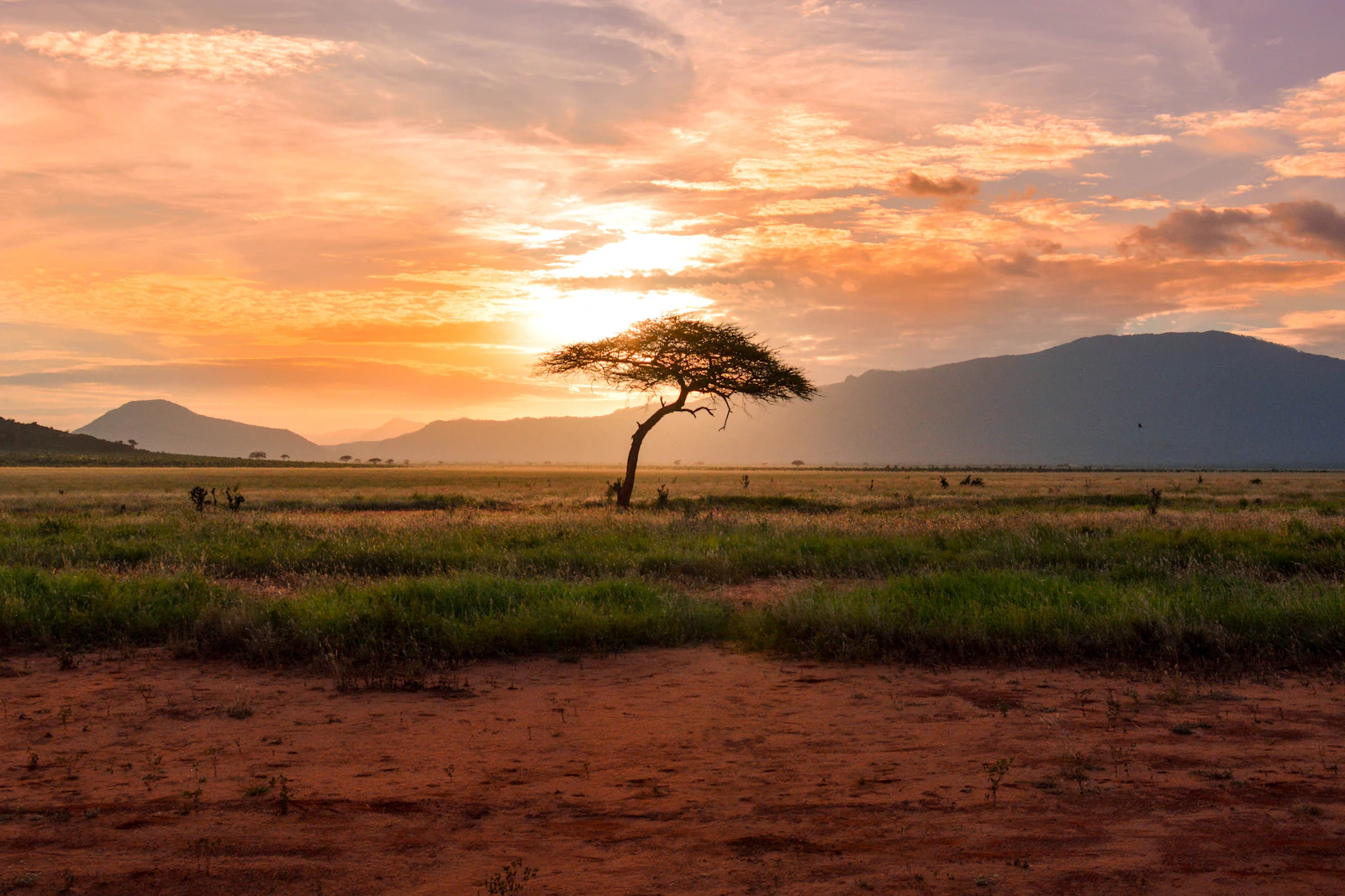
Ranthambore is not India’s most famous tiger reserve. Corbett attracts more visitors, Kanha more column inches. But the sighting statistics at Ranthambore are the most consistent in the country. The 1,334 square kilometres of dry deciduous forest, grassland, and ancient lake sit in the shadow of a 12th-century Rajput fort, and the tigers here move through the landscape with the confidence of animals that have been protected and studied long enough to stop hiding. On a good morning — and Ranthambore produces more good mornings than anywhere else in India — a tigress crosses a dry riverbed without slowing her pace.
Aman-i-Khás places ten pavilion tents at the edge of the reserve boundary. The structures are canvas-and-hardwood with high ceilings, hardwood floors, and freestanding soaking tubs. The design references Mughal campaign tent architecture — soaring proportions, bold geometric textiles, carved furniture — not as decoration but as a genuine connection to the imperial aesthetic that defined this region of Rajasthan. The nearby Ranthambore Fort, an UNESCO World Heritage Site, makes the reference locally appropriate.
What separates Aman-i-Khás from other camps at Ranthambore is the quality of the naturalists. They track individual tigers by name and known territory, understand the seasonal movement patterns of each animal, and read the alarm calls of langur monkeys and spotted deer with the precision of people who have spent years learning a specific vocabulary. Safaris run twice daily into the park’s six designated zones, and the evening debrief at the fire pit — where tomorrow’s zones are chosen based on the day’s intelligence — is part of the experience rather than a formality.
Dinner is Rajasthani: spiced vegetables, slow-cooked dal, lamb cooked with regional spices, fresh roti from the camp kitchen. The stars above the open plain are exceptional. The distant alarm call of a spotted deer in the forest at two in the morning, signalling that something large is moving somewhere nearby, is a sound guests tend to remember long after the rest of the trip has faded.