Morocco & the Atlas Mountains
Morocco layers ancient medinas, Saharan sand dunes, and the snow capped High Atlas Mountains into a single country of extraordinary contrasts. From the labyrinthine souks of Fez to the silence of the Erg Chebbi dunes at dawn, it offers one of the world's most richly sensory travel experiences, and an accommodation culture of unmatched craft and beauty.
Don't miss
Local tips
Morocco has been pulling travellers across the Strait of Gibraltar for centuries, and it earns every journey. Mediterranean coast to the north, Atlantic to the west, Sahara to the south, and the High Atlas cutting diagonally through the middle at nearly 4,200 metres. Each zone operates under a different climate, culture, and logic. Few countries pack this much contrast into a single itinerary.
Morocco’s four imperial cities each served as capital at different periods and each carries a distinct character. Fez is the oldest and the most disorienting. Its medina, Fez el-Bali, is a UNESCO World Heritage Site that functions today essentially as it did in the 14th century — the street layout, the crafts guilds, the tanneries still processing leather in stone vats with saffron, poppy, indigo, and pigeon dung. The tanneries are the city’s most photographed sight, but the medina rewards those who spend days in it rather than hours. Hire a licensed guide for the first morning; the streets genuinely defeat even experienced navigators.
Marrakech runs faster. The Djemaa el-Fna square at dusk — snake charmers, storytellers, mobile food stalls, the whole theatrical production — is one of the world’s great urban spectacles. The riads concealed behind the medina’s blank exterior walls offer the opposite: private courtyards with central fountains, orange trees, and the silence of thick earthen walls. That contrast between the street outside and the interior is the essential Marrakech experience.
The riad — the courtyard house as boutique hotel — is one of the world’s great accommodation formats. The finest riads in Fez and Marrakech are acts of craft as much as hospitality: hand-carved plasterwork, zellij tile floors, muqarnas ceilings, cedar-wood mashrabiya screens. The concept of the inward-looking house, blank facade and elaborate interior, produces a privacy and calm that feels genuinely rare now. Book the best ones months ahead for spring and autumn travel. They fill early and don’t discount.
The Erg Chebbi dunes near Merzouga rise to 150 metres and extend for 22 kilometres. The standard experience — camel trek to a desert camp at dusk, proper beds in Berber-style tents, stars from the dune crest, sunrise light across the sand — is theatrical and deliberate. It is also genuinely beautiful. The theatricality doesn’t diminish it.
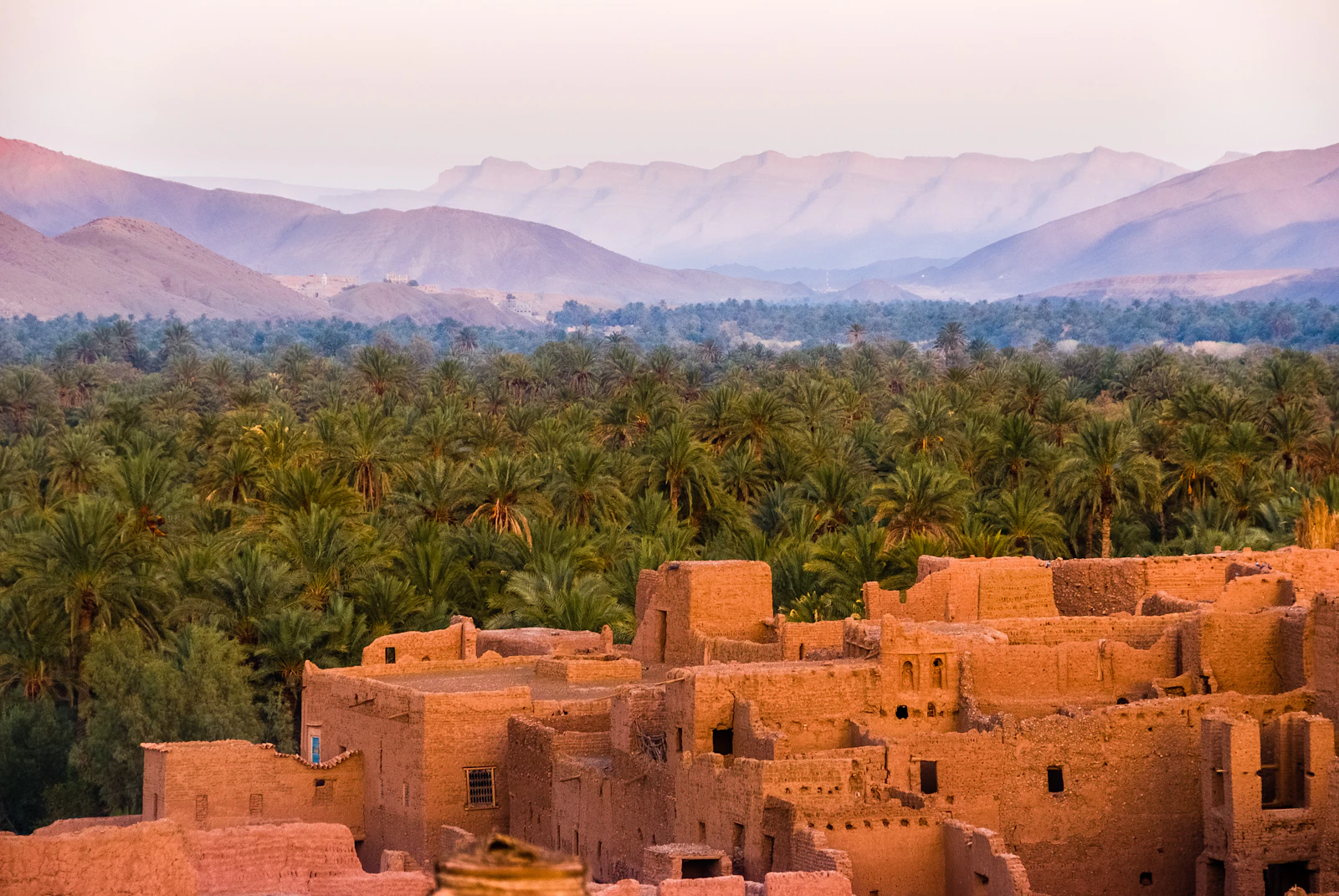
The High Atlas is a different country within the country. Villages cling to valley walls above terraced barley and almond fields; mule trains are the main transport above the road line. The Toubkal Circuit, two to three days, ascends North Africa’s highest peak — achievable for most fit hikers — with panoramas from the summit over a sea of lower ranges extending south toward the Sahara. Cave hotels and kasbah lodges built from pisé (rammed earth) in the Draa Valley and Skoura palm groves are among the most atmospheric places to sleep in the country.
Direct flights reach Marrakech and Casablanca from London, Paris, Madrid, and most major European cities. CTM buses run comfortably and cheaply between the major cities. The train network connects the northern corridor well. In the south — Draa Valley, Sahara routes — hiring a driver with a 4WD is more practical and considerably more enjoyable than self-driving.
Best Time to Visit
March–May and September–November
Spring (March to May) and autumn (September to November) are the prime seasons, comfortable temperatures in the medinas (20–28°C), clear conditions in the mountains, and dunes that haven't yet hit summer's 45°C extremes. Summer is brutally hot in the Sahara but surprisingly cool in the Atlas highlands. December to February is ideal for Atlas ski season (Oukaimeden resort) and for experiencing Fez and Marrakech without peak-season crowds.
Travel Essentials
Visa
Visa-free for 90 days for US, UK, EU, Canadian, and Australian passport holders. Passport must be valid for at least 6 months beyond entry date.
Book Your Trip
We earn a small commission when you book through our links — at no extra cost to you. Learn more
Places to sleep
We've hand-picked the unusual hotels worth the trip in Morocco & the Atlas Mountains.
Browse all categories