Namibia
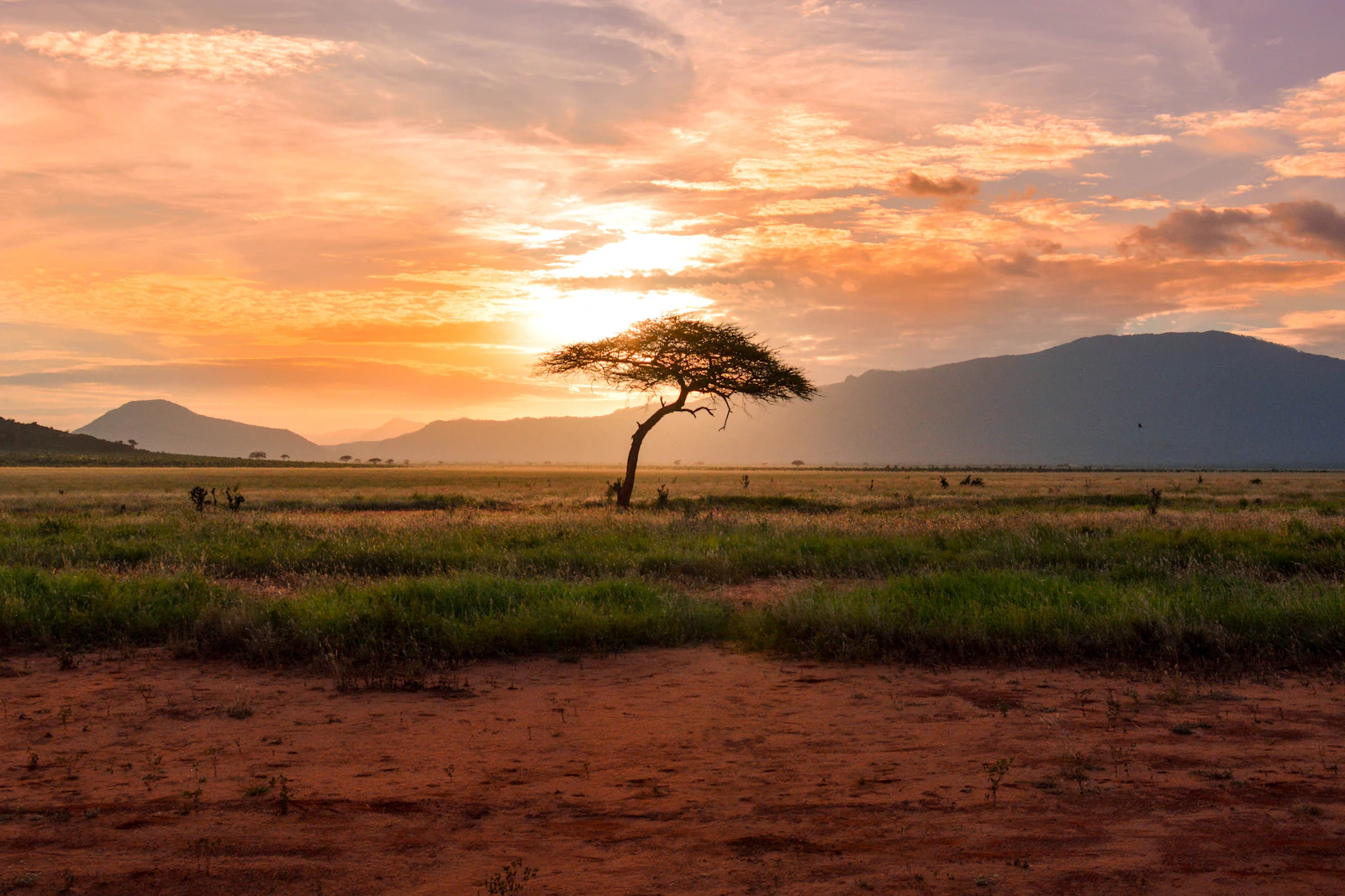
Namibia is Africa's great emptiness, a country twice the size of California with a population of fewer than three million, where the world's oldest desert meets a skeleton coast of shipwrecks and seal colonies, and where the dunes of Sossusvlei rank among earth's most extraordinary landscapes. It is also home to one of the continent's most sophisticated conservation-based tourism models.
Don't miss
Local tips
Namibia receives fewer than two million tourists per year — low for a country with this much to offer — which means the sense of wilderness here is genuine rather than staged. You can drive four hours in Damaraland without encountering another vehicle. You can sleep in a desert lodge where the nearest neighbour is 50 kilometres away. Undisturbed space at this scale is increasingly rare. Namibia is one of the few places where it is still the default.
The Namib Desert dunes around Sossusvlei are among the highest in the world at 300 metres, and the iron-stained sand shifts from deep orange to burning red in the angled light of sunrise and sunset. Climbing Dune 45, 45 kilometres from the Sesriem gate, takes 30 minutes of effort up a knife-edge ridge and rewards with a panorama of orange extending to every horizon.
Deadvlei is more striking still. A white clay pan within walking distance of the Sossusvlei car park, where camel thorn trees that died approximately 900 years ago — when migrating dunes blocked their watercourse — still stand upright, the desert air too dry for decomposition. White pan, black tree skeletons, orange dune walls enclosing the scene on three sides. The photographs look altered. They are not.
Etosha National Park centres on the Etosha Pan, a vast, flat, blinding-white salt lake that was an inland sea before tectonic uplift drained it roughly five million years ago. In the dry season, waterholes around the pan’s southern edge draw hundreds of elephants, entire lion prides, black and white rhino, giraffe, and zebra. The floodlit waterhole at Okaukuejo camp lets you watch wildlife drinking through the night from the perimeter fence — one of Africa’s most accessible and consistently productive game-viewing set-ups.
The desert-adapted elephants of Damaraland and the Hoanib River Valley survive in landscapes receiving less than 25mm of rainfall annually. They travel vast distances between water sources, dig for water with their feet in dry riverbeds, and eat vegetation their Chobe or Amboseli counterparts would ignore. Watching a family materialise from a rocky hillside and descend silently into a dry riverbed is one of Africa’s finest wildlife encounters.
The Skeleton Coast, named for the bleached whale bones and wrecked ships whose sailors had no prospect of surviving a waterless desert, is accessible today only by fly-in safari lodges operating under strict concession limits. Cape Cross, slightly more accessible by road, holds a Cape fur seal colony of over 100,000 animals. The noise, the smell, and the sheer spectacle of it has no equivalent on the continent.
Namibia pioneered the communal conservancy model in Africa: 1996 legislation granted rural communities the right to manage and benefit from wildlife on their land. Today, 86 communal conservancies cover 20% of the country. Cheetah, wild dog, desert lion, and black rhino exist in greater numbers on communal land because the communities living alongside them have direct financial incentives for their survival. Staying in conservancy lodges is one of the most direct ways a traveller can fund a working conservation model.
Best Time to Visit
May–October (dry season)
The dry season (May to October) is optimal for Namibia, wildlife concentrates around dwindling waterholes (best game viewing of the year), desert landscapes are at their most dramatic, and the near-zero humidity makes even warm days comfortable. June to September is the peak period with cool nights. The wet season (November to April) brings the Namib's rare rains, dramatic lightning storms over the dunes, and the green Etosha pan transformed into a seasonal wetland attracting massive flamingo flocks.
Travel Essentials
Visa
Visa-free for 90 days for US, UK, EU, Canadian, and Australian passport holders. Must have at least one blank passport page.
Book Your Trip
We earn a small commission when you book through our links — at no extra cost to you. Learn more
Places to sleep
We've hand-picked the unusual hotels worth the trip in Namibia.
Browse all categories